
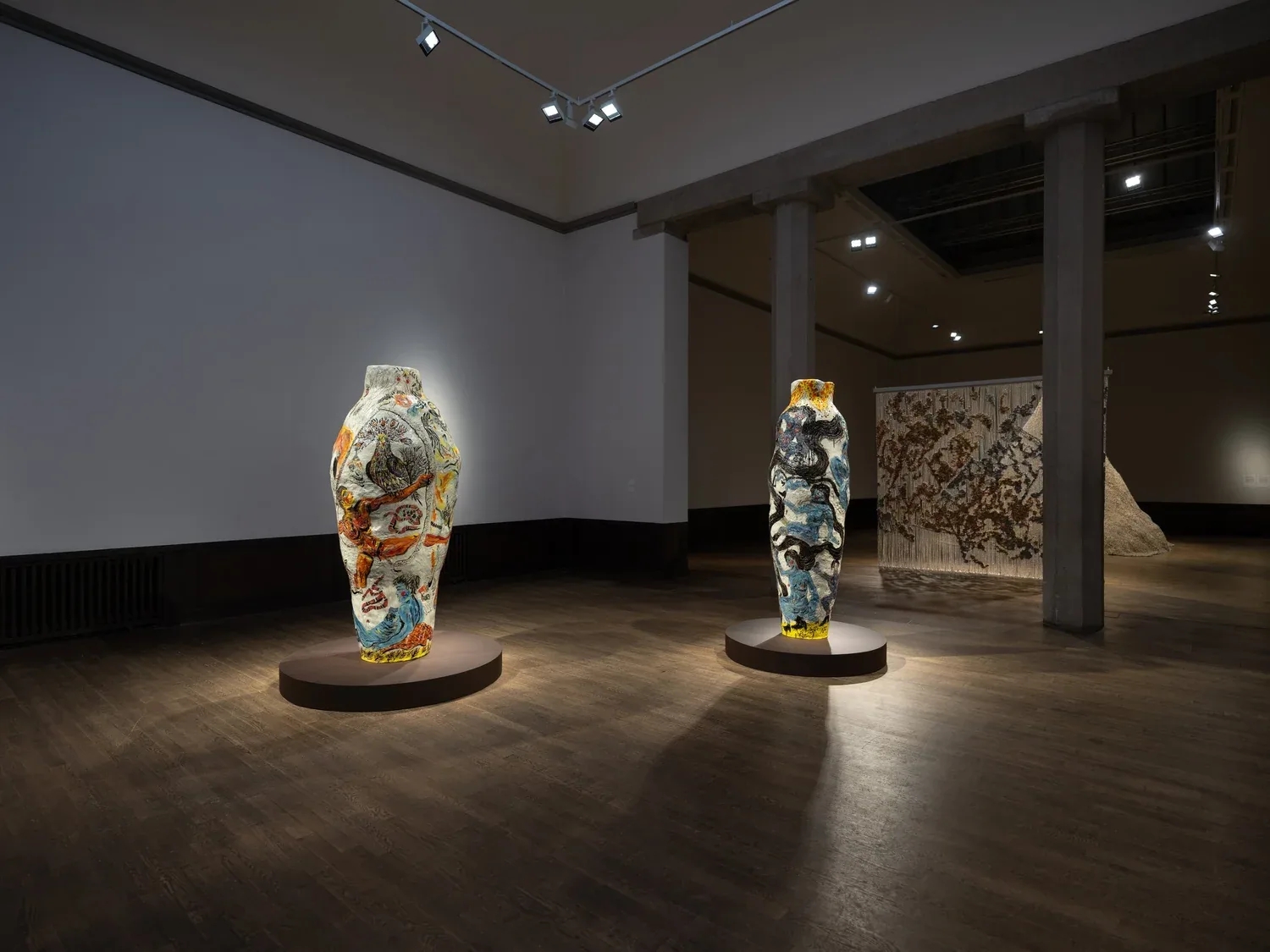

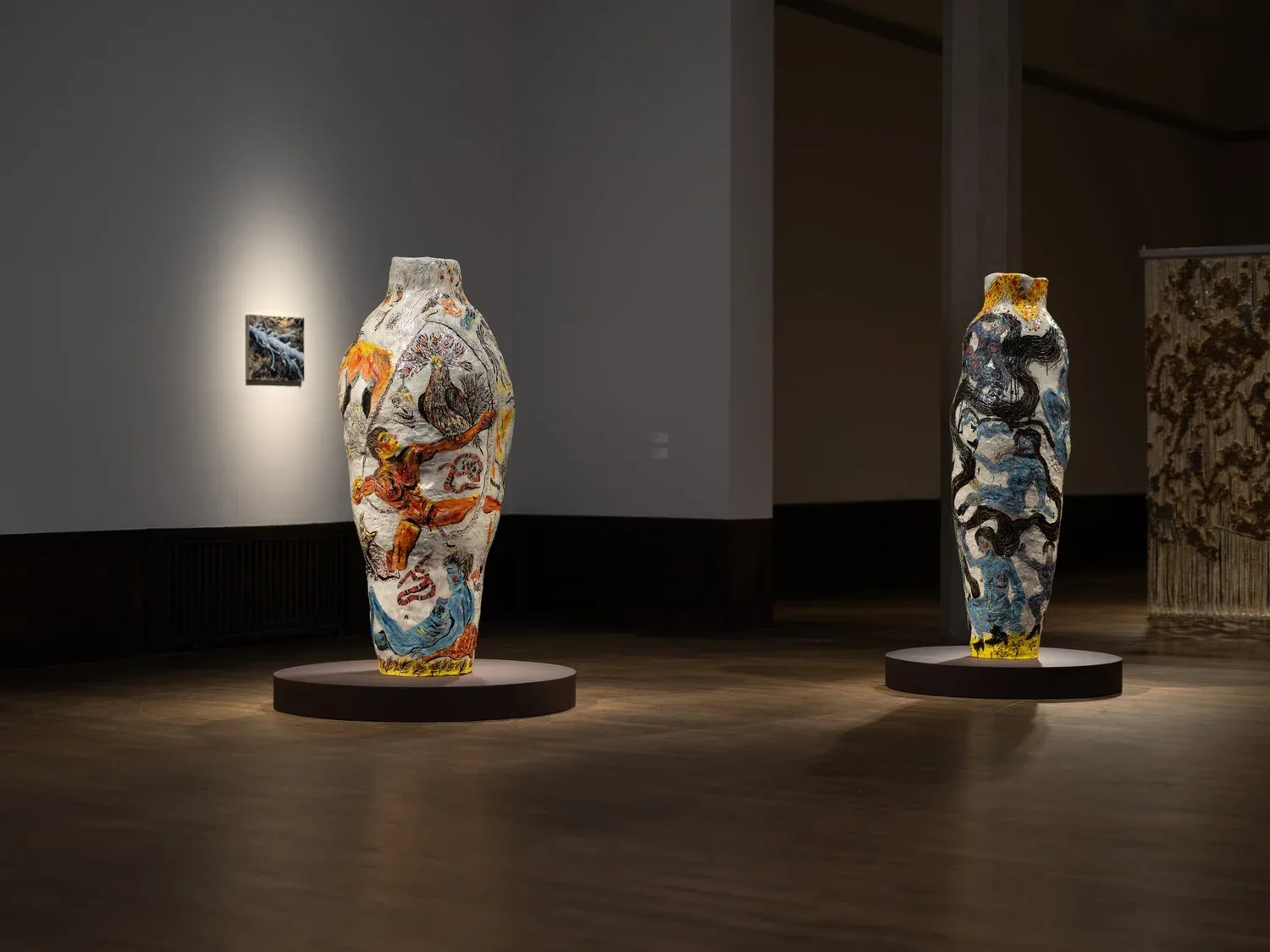


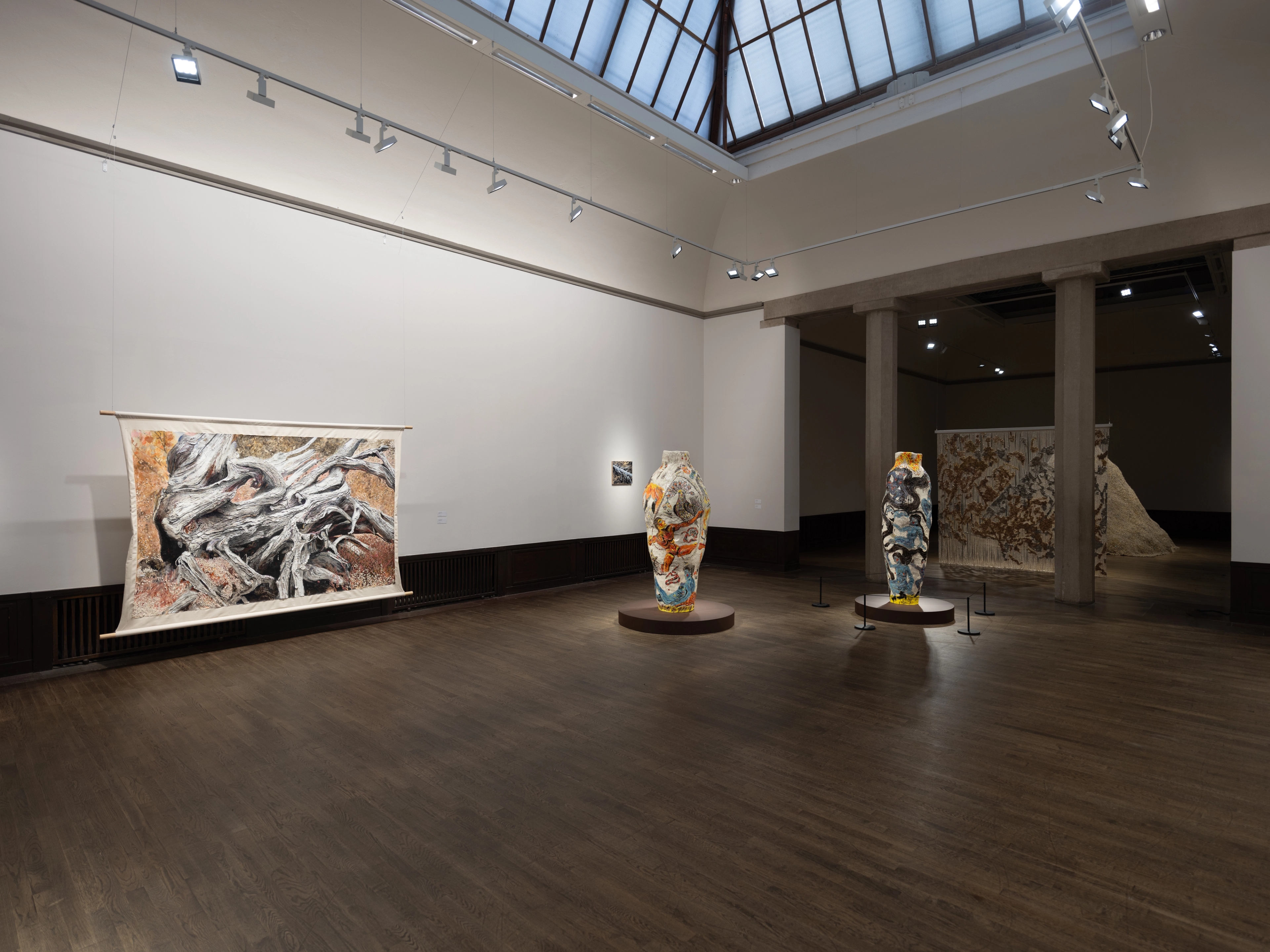

To think that the world emerges with us—humans moving, bodies in motion, skin, heat, breath, into what we call society—is to recognise that we are entangled, deeply, with rhythms that do not pause for comprehension. I have tried to map this entanglement in my work. Ceramics, drawings, objects that occupy space, hold space, fracture space. Sometimes they speak in glitched lines, visual melodies that ache, that echo memory and desire. Figurative but never fixed, the images are layered, distorted, rewritten. Something intimate. Something technological. Like opening an old folder on a phone that no longer works. Half-visible fragments of self linger. Half-erased. Half-remembered.
At Liljevalchs, my work might host a body, and in doing so, carry the burden of being alive. Vessels carry water. Ashes. Or nothing. In ancient Egypt, they carried flesh. Stone sarcophagi, bodies laid toward the rising sun, painted and inscribed like second skins. Fragile shields against disappearance. My surfaces do the same. Preserve memory. Tremble at the threshold between presence and loss.
And it is at this threshold that I begin to question heaven. I am unsure if it is a place I wish to reach. Rather, I long to go under the stairs. Into a darkroom. Into a space where no order exists. Where consciousness dissolves and unfolds. Where bodies under the red light give more meaning than any religion, any promise of paradise. Half a body appears. One arm. One leg. Half a torso. Everything else dissolves into black. A cosmos of shadow. Surrounded by these forms, under the influence of substances I can no longer name, I forget which one carries me here. A desperate need to escape myself. And a profound comfort.
From there, my attention returns to earth. The strings of life are twisted. Dust drifts from distant structures. Bodies resist dissolution through nails, hair, and protein. Pollution is not just chemical; it is the slow disappearance of care, connection, and attention. My ceramics act as repositories for traces of all this. Intimate archives of loss, continuity, quiet persistence. I imagine them broken, scattered after the collapse. Fragments carrying something of the world. Puzzling. Unresolved.
These broken pieces, collected after each performance, are not just debris. They are like the bricks people gathered after the fall of the Berlin Wall—kept, held, remembered. Small monuments of collapse and liberation, of fragility and change. Each shard carries a story, a history, a trace of what came before, and a witness to transformation.
And in those fragments, the work regenerates. I aim to depict moments where art participates in healing. Where it responds. Where it bears witness. Shards of ceramic lie scattered. Sharp edges glint. Light seeps in. Beauty born from loss. The pieces do not mourn. They transcend. Shattered and sacred intertwine. From fragments, something luminous emerges. Beyond form. Beyond the Earth. Into the space where nothingness meets.
Press: Liljevalchs, Dagens Nyheter
- Stockholm
- 21 November 2025 — 11 January 2026
- Text: Karim Boumjimar
- Photography: Mattias Lindbäck
- Curator: Joanna Sandell Wright / Storm Janse van Rensburg